2,000 Year Old Text About Melchizedek
Long before Christianity existed, an ancient community was already worshiping a divine savior who forgives sins and defeats demons—but his name wasn’t Jesus. Discover the shocking truth hidden inside Dead Sea Scroll 11Q Melchizedek, the mysterious ancient manuscript that was never meant to be found.

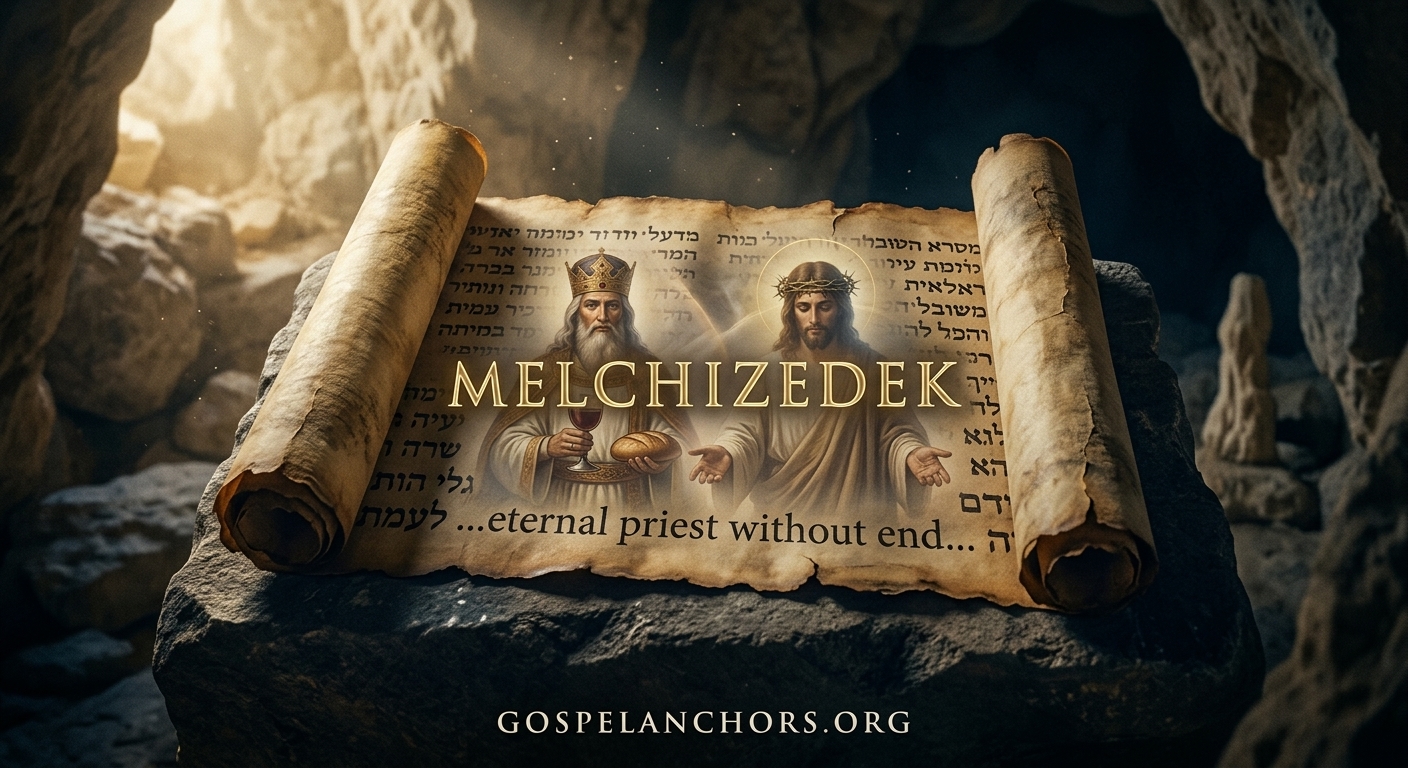
<p>Have you ever stumbled across a biblical mystery that completely upends everything you thought you knew about ancient history? Tucked away within the pages of the Old Testament lies a figure so shrouded in secrecy that scholars have spent centuries arguing over his true identity. His name is <strong>Melchizedek</strong>.</p>
<p>Most people know him as the mysterious king who appears briefly to Abraham in the Book of Genesis. But a shocking archaeological discovery hidden deep inside a desert cave revealed something the ancient world never intended for us to find: someone was already worshiping a divine Melchizedek long before Jesus was ever born.</p>
<h2>The Genesis Mystery: A Man with No Past</h2> <p>To understand why this discovery shook the theological world, we have to look at how bizarrely Melchizedek is introduced in scripture. He appears in the Book of Genesis for exactly three verses. He suddenly materializes, gives Abraham bread and wine, receives a tithe (a tenth of everything Abraham owned), and then vanishes into thin air.</p>
<p>That is it. There is absolutely no backstory, no lineage, no mention of his death, and zero explanation of where he came from. He simply disappears from the biblical narrative as fast as he arrived.</p>
<h2>The Book of Hebrews: A Massive Theological Claim</h2> <p>Fast forward thousands of years to the New Testament Book of Hebrews, and the narrative around this minor character completely changes. The author of Hebrews makes a massive, unprecedented claim about this three-verse king. He describes Melchizedek as being completely eternal—without father, without mother, and without genealogy. </p>
<p>Furthermore, Hebrews states that Melchizedek is significantly greater than Abraham and every single Jewish priest who ever lived. For decades, modern theologians and historians could not logically explain why a minor figure from Genesis was suddenly elevated to a cosmic, eternal status. Where did this intense theology come from?</p>
<h2>The 2,000-Year-Old Secret: Scroll 11Q Melchizedek</h2> <p>The missing link was buried in the Judean desert for two millennia until a breakthrough discovery changed everything: the <strong>Dead Sea Scrolls</strong>. Among the fragments recovered from Cave 11 was a manuscript officially labeled <strong>11Q Melchizedek</strong> (or 11Q13), written roughly 100 years before Christianity even existed.</p>
<p>Inside this ancient Jewish text, Melchizedek is not described as a human king or an earthly priest. Instead, he is revealed as a celestial, divine being. According to the scroll, this mysterious figure performs extraordinary supernatural acts:</p> <ul> <li>He possesses the divine authority to forgive sins.</li> <li>He executes the final judgment at the end of days.</li> <li>He personally fights and defeats the ultimate demon, Belial.</li> </ul>
<h2>Did the New Testament Borrow an Existing Tradition?</h2> <p>These are not typical priestly roles found in the Old Testament. Forgiving sins, executing final judgment, and conquering the ultimate forces of darkness are the exact, specific roles that the New Testament attributes directly to Jesus Christ.</p>
<p>This means the author of the Book of Hebrews was not inventing a brand-new theology from scratch when comparing Jesus to Melchizedek. Instead, he was strategically borrowing from a powerful, pre-existing Jewish mystical tradition. Someone had already built this complex divine framework long before Christianity arrived on the scene. That ancient scroll was lost to time, and it was never meant to be found.</p>